
October arrives, and suddenly everything is pink.
Pink packaging. Pink ribbons. Pink clothing. Pink coffee cups. Pink cosmetics. Even products that have absolutely nothing to do with women’s health suddenly get a rosy makeover, accompanied by a reassuring message about “supporting women.”
Some of these campaigns genuinely do raise awareness and money for important causes, but others raise a more uncomfortable question:
When does supporting a cause become a marketing strategy?
That’s where the term pinkwashing comes in.
What exactly is pinkwashing?
Pinkwashing is the practice of using pink branding, breast cancer awareness messaging or association with a women’s health cause to create a positive public image—without necessarily making a meaningful contribution to the cause itself.
It can take many forms. A company might launch a limited-edition pink product and donate a tiny percentage of the profits. Another might simply change its packaging to pink and use phrases like “supporting breast cancer awareness” without explaining what that support actually means. And sometimes, the connection between the product and women’s health is almost entirely cosmetic.
The problem isn’t pink itself. The pink ribbon has become an incredibly recognizable symbol of breast cancer awareness, and that visibility has undoubtedly helped bring the disease into public conversation.
The problem is when the symbolism becomes more important than the substance.
When awareness becomes a sales tactic
There’s nothing inherently wrong with a company making money. Companies need to make money to employ people, manufacture products, pay suppliers and stay in business. And there’s nothing wrong with donating a portion of profits to a good cause either. The issue arises when the appearance of doing good becomes a marketing tool without meaningful action behind it.
Imagine seeing a pink bottle of skincare in October. The packaging tells you that buying it supports women. But how much is actually donated? Where does the money go? Is the donation meaningful, or is the campaign primarily designed to sell more products? And perhaps most importantly:
Would the company still be doing anything for women’s health if it weren’t October?
That last question is particularly revealing. Because genuine values don’t generally need a calendar reminder.
The problem with “pink for a month”
One of the strangest things about Breast Cancer Awareness Month is how quickly women’s health can become seasonal. For 31 days, brands talk about women. They talk about self-care, breasts, health and supporting women.
And then November arrives. The pink disappears, the campaign ends, and everyone moves on to the next marketing opportunity. But breast cancer doesn’t disappear on 1 November, neither do the other health issues affecting women, and women certainly don’t stop making decisions about their health and wellbeing.
This is why genuine health-conscious businesses should be thinking beyond the colour pink.
What does genuine health-consciousness actually look like?
If a company genuinely cares about health, shouldn’t that concern be visible in the way it operates throughout the year? It might mean being transparent about ingredients. It might mean carefully considering which ingredients are necessary and which aren’t. It might mean choosing more sustainable packaging. It might mean sourcing raw materials responsibly. It might mean making products that are designed to be useful rather than encouraging consumers to constantly buy more. It might mean educating customers instead of frightening them into purchasing something.
None of these things are particularly glamorous. They don’t necessarily make a good Instagram campaign, and you can’t slap a pink ribbon on them and call it a movement.
But they’re arguably much more meaningful.
You don’t have to be afraid of everything
This is an important distinction. Talking about ingredients doesn’t mean telling women that everything they’ve ever put on their skin is dangerous. It doesn’t mean that every conventional cosmetic is secretly harmful, and it certainly doesn’t mean that buying one particular natural product is going to prevent disease. Health is far too complicated for that.
But there is something empowering about knowing what you’re buying. You can read an ingredient list. You can ask questions. You can decide that you prefer a shorter, simpler formulation. You can choose less plastic. You can decide that you’d rather support a company whose values align with your own.
Those choices may seem small individually, but collectively, they shape the products companies choose to make.
The beauty industry has a particularly interesting role to play
This is where pinkwashing becomes especially interesting. The beauty industry sells products directly associated with our bodies. We put them on our skin, our hair, our lips. We wash with them and we moisturize with them, and because women are still disproportionately targeted by the beauty and personal-care industry, women are also disproportionately exposed to the marketing messages surrounding these products.
We’re constantly being told that we need another product, another serum, another cream, another treatment, another “must-have.” Then October comes around and suddenly that same industry tells us that buying a pink version of something is another way to support women’s health. Perhaps we should be asking a different question:
What if supporting women’s health meant making better products in the first place?
Not just in October.
Every month.
This is why we don’t make a pink product for October
At Tallow Treats, we’ve thought about this quite a bit. We could create a pink product. We could put a pink label on something we already make. We could run an October promotion and tell you that buying it is a way to support women’s health, but that wouldn’t really reflect what we believe. Our approach to skincare isn’t something we switch on for October; it’s something we’ve built into the business from the beginning.
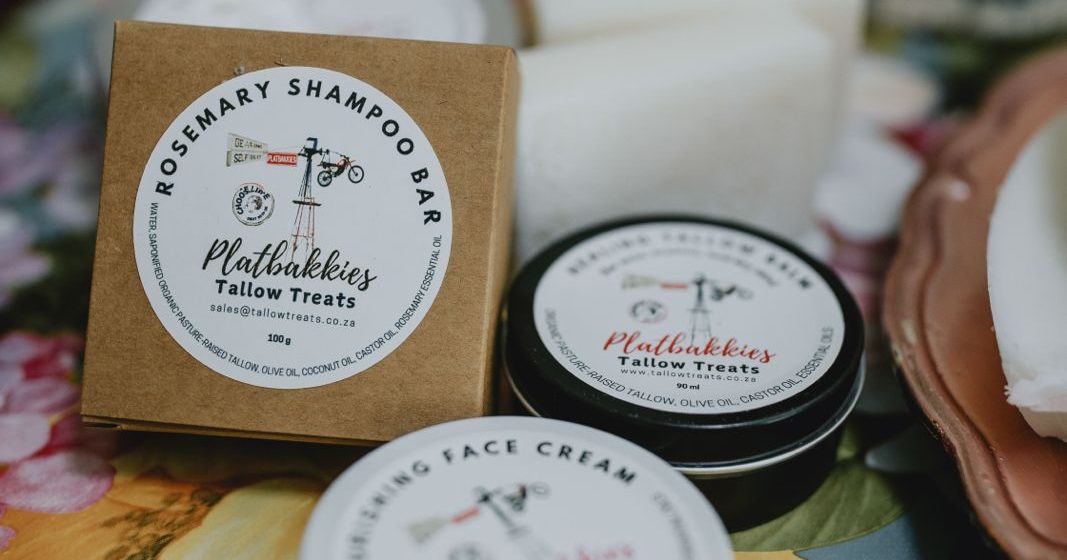
We think carefully about the ingredients we use. We make our products with tallow rendered from the suet of pasture-raised animals from our own family farm. We choose simple formulations rather than adding ingredients simply because they’re trendy. We consider the packaging our products come in, and we try to make products that are genuinely useful — products people can incorporate into their everyday routines rather than constantly being encouraged to buy the next new thing.
None of that needs to be pink, and none of it needs to stop when October ends.
So what can we do instead?
The answer isn’t to reject Breast Cancer Awareness Month, but to look beyond the marketing surrounding it. Support organizations doing meaningful work, encourage the women in your life to prioritize their health, have uncomfortable conversations, and when you’re buying products, look past the packaging.
Ask yourself:
What is this company actually doing?
Look at the ingredients, the sourcing, the packaging. Look at the company’s practices when nobody is watching, and ask whether the values being advertised in October are actually visible throughout the rest of the year. Because a company doesn’t demonstrate that it cares about women’s health by making something pink for 31 days. It demonstrates it through what it chooses to do for the other 334.
More than pink
We don’t think there’s anything wrong with pink, or that there’s anything wrong with breast cancer awareness. We certainly don’t think every company running a pink campaign is automatically guilty of pinkwashing, but we do think it’s worth asking questions. Because awareness is not the same as action, and a pink label is not the same thing as a commitment to women’s health.
So this October, by all means, wear the ribbon. Have the conversation. Support meaningful organizations. But when you see something turn pink, take a moment to look past the colour. What’s actually behind it? That might be a more meaningful question than “How much of this purchase goes to charity?”
And perhaps that is what being genuinely conscious about women’s health looks like—not buying something because it’s pink, but choosing where we put our money, our attention and our trust.